See all of our heating and cooling services.
Short answer
Ductless maintenance is mostly the indoor units, and neglect shows up as a smell rather than poor performance. The blower wheel and coil accumulate dust and, in damp conditions, biological growth. Rinsing filters is homeowner work. Cleaning the wheel and coil properly is not.
That distinction is the whole value of the service: a visit that only changes filters has done the part you could have done yourself and left the part that produces the complaint. Ask what a maintenance visit actually includes, whether the blower wheel is removed and cleaned or only wiped, whether the coil is cleaned, whether the condensate path is cleared, and how often each of those is genuinely needed for the way your system is used.
Jobs this covers
- Mini-split deep cleaning
- Indoor coil and blower cleaning
- Condensate drain service
- Outdoor coil cleaning
- Seasonal performance checks
- Multi-zone system maintenance
Common problems and warning signs
- Airflow has declined
- The unit smells musty
- Dust appears around the head
- Water drips indoors
- Heating or cooling costs rise
- The system has not been professionally cleaned
What service may include
Coil cleaning restores lost capacity. Real scope only shows up on the visit. Maintenance may include filter care, safe coil and blower cleaning, drain flushing, outdoor-coil inspection, electrical and control checks, temperature measurements and a review of snow and debris clearance.
What affects the recommendation and price
Wall heads collect more grime than people expect. Number and height of indoor units, level of buildup, coil and blower access, drainage, pets, cooking exposure and outdoor-unit condition affect scope and price.
What is different around Burlington
Wall-mounted heads in living space collect cooking grease, pet hair and dust faster than equipment in a basement, and a head that runs almost continuously through a Vermont winter clogs sooner. Outdoor units also need their clearance from snow and roof runoff kept open all season.
What a written quote should tell you
- Whether the service includes cleaning the blower wheel and coil, or only rinsing filters
- How many indoor heads are covered, since pricing is usually per head
- Whether the outdoor unit, drain line and condensate path are included
- Whether operating measurements are recorded so performance can be compared year to year
- Recommended interval, and whether it changes with pets, dust or damp conditions
| Task | Homeowner or technician |
|---|---|
| Rinsing the filters | Homeowner work |
| Cleaning the blower wheel and coil | Not homeowner work: dust and, in damp conditions, biological growth build up here and show up as an odour and reduced output |
| Clearing the condensate path and drain line | Ask whether the visit includes it |
| The outdoor unit | Ask whether the visit includes it, and whether operating measurements are recorded so performance can be compared year to year |
How to maintain a ductless heat pump yourself
This is the maintenance that separates a heat pump that performs from one that disappoints, and almost all of it is free.
- Wash the indoor filters monthly. Open the front cover of each head and slide the mesh filters out. Rinse them under a tap, wash with mild detergent if they are greasy, and let them dry completely before refitting. They clog faster than people expect.
- Wipe the head and the vanes. Clean the visible interior surfaces and the air-direction vanes. Dust on the blower wheel is the next thing to accumulate, and that one needs a technician.
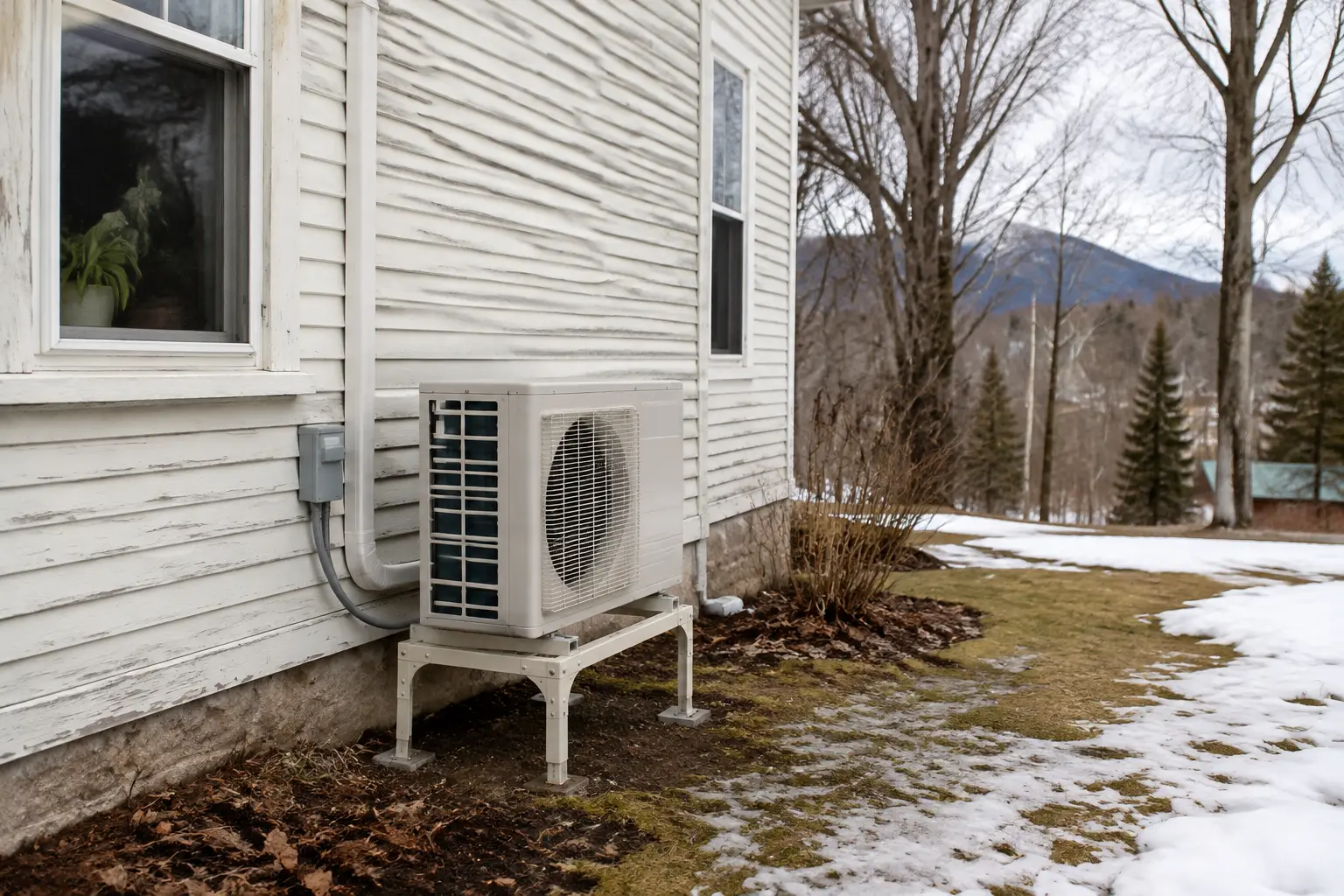
- Clear the outdoor unit year-round. Keep generous clearance on every side and beneath it. In summer that means vegetation and clippings. In winter it means snow, drifting and ice shed from the roof above.
- Confirm it is above the snow. The unit needs clear space beneath it for defrost meltwater to drain away. If it is sitting in refrozen meltwater or buried, its defrost cycle cannot work and performance collapses.
- Rinse the outdoor coil each spring. With the power off at the disconnect, rinse the coil gently with a hose from the inside outward if you can reach it. Never use a pressure washer: the fins bend and the coil is destroyed.
- Check the condensate drain. Confirm the drain line from each indoor head runs freely and is not kinked or blocked. A blocked condensate line shows up as water dripping from the head onto the wall.
- Compare this winter to last. Note how long the system runs and how warm the delivered air is at similar outdoor temperatures. A system that has quietly lost capacity shows up in that comparison long before it fails.
Common questions
Can I spray cleaner into a mini-split head?
Improper chemicals or uncontrolled water can damage electronics and finishes. Deep cleaning should protect components and manage wastewater.
Does cleaning fix every odor?
No. Drainage, room moisture, building materials and other sources can also cause odor.
What should I do about snow around the outdoor unit?
Maintain safe airflow and drainage without striking delicate coil fins. Correct stand height and placement are part of winter readiness.
What is HSPF and how does it compare to SEER?
They are seasonal efficiency ratings for the two modes: HSPF measures heating performance across a season and SEER measures cooling, both as a ratio of output to electricity consumed. Higher is better on both. The current versions are HSPF2 and SEER2, tested under revised conditions, so figures are not directly comparable to older ratings: a common source of confusion when comparing an existing unit to a new one. For Vermont, HSPF matters far more than SEER, and even HSPF is a national-average figure. Capacity and efficiency at your actual design temperature is the more meaningful comparison.
How do I know if my heat pump is still performing properly?
Track two things over time. First, run time: a system that used to satisfy the thermostat and now runs continuously in similar weather has lost capacity. Second, delivered air temperature: you can measure the air coming out of a ductless head with a cheap thermometer, and comparing this winter to last winter at similar outdoor temperatures is more informative than any single reading. Rising electricity use with no change in household behaviour is the third signal, and it is the one most people notice first.
How much heat pump maintenance can I do myself?
A useful amount, and doing it is what separates a heat pump that performs from one that disappoints. Wash the indoor filters monthly during heavy use: they slide out of the head and rinse under a tap. Keep the outdoor unit clear year-round: leaves and grass clippings in summer, snow and ice in winter, and generous clearance on every side. Rinse the outdoor coil gently with a hose in spring. Check that condensate drains freely. What needs a technician is refrigerant charge, electrical checks, blower and coil deep cleaning, and verifying the defrost controls.
What happens if a heat pump is never maintained?
It gets quietly more expensive rather than breaking. Dirty filters and coils reduce heat transfer, so the unit runs longer for the same output and the efficiency you paid a premium for erodes, often by a substantial margin over a few years, with no single moment where anything appears wrong. Then the accumulated strain shows up as a compressor or a fan motor failure, which is the expensive end. Because a heat pump runs in both seasons, neglect compounds roughly twice as fast as it would on a heating-only appliance.
How often should a heat pump be serviced?
Once a year professionally is the general standard, and twice a year is a defensible choice for a system that is the house's only heating and cooling source, timed before the heating season and before the cooling season. Homeowner filter cleaning is monthly to quarterly depending on the household. If maintenance records matter for your warranty, and they often do, keep the invoices, because a manufacturer denying a compressor claim for lack of documented maintenance is a real occurrence, not a theoretical one.
Does a maintenance plan actually save money?
Sometimes. It depends on what is in it instead of on the idea. A plan that includes the annual visit you would have booked anyway, at a discount, plus priority scheduling in a cold snap, can be worth it. Priority scheduling has real value in a Vermont January. A plan that is a payment schedule attached to a visit consisting of a visual glance is not. Ask for the specific task list, ask whether it includes filters and a refrigerant charge check, and ask what priority actually means in practice.
Does maintenance affect a heat pump's warranty?
Maintenance is not itself warrantied, but it is frequently the condition that keeps the compressor warranty valid: many manufacturers require proof of annual service to honor a claim, which makes a missed maintenance visit a warranty risk even when nothing seems wrong.
What is the most common maintenance mistake heat pump owners make?
Skipping the outdoor coil rinse because the unit looks fine from a distance. A coil coated in fine debris restricts heat transfer well before it is visibly dirty, so the unit is already running less efficiently by the time anyone notices from the outside.