Browse our heating and cooling services.
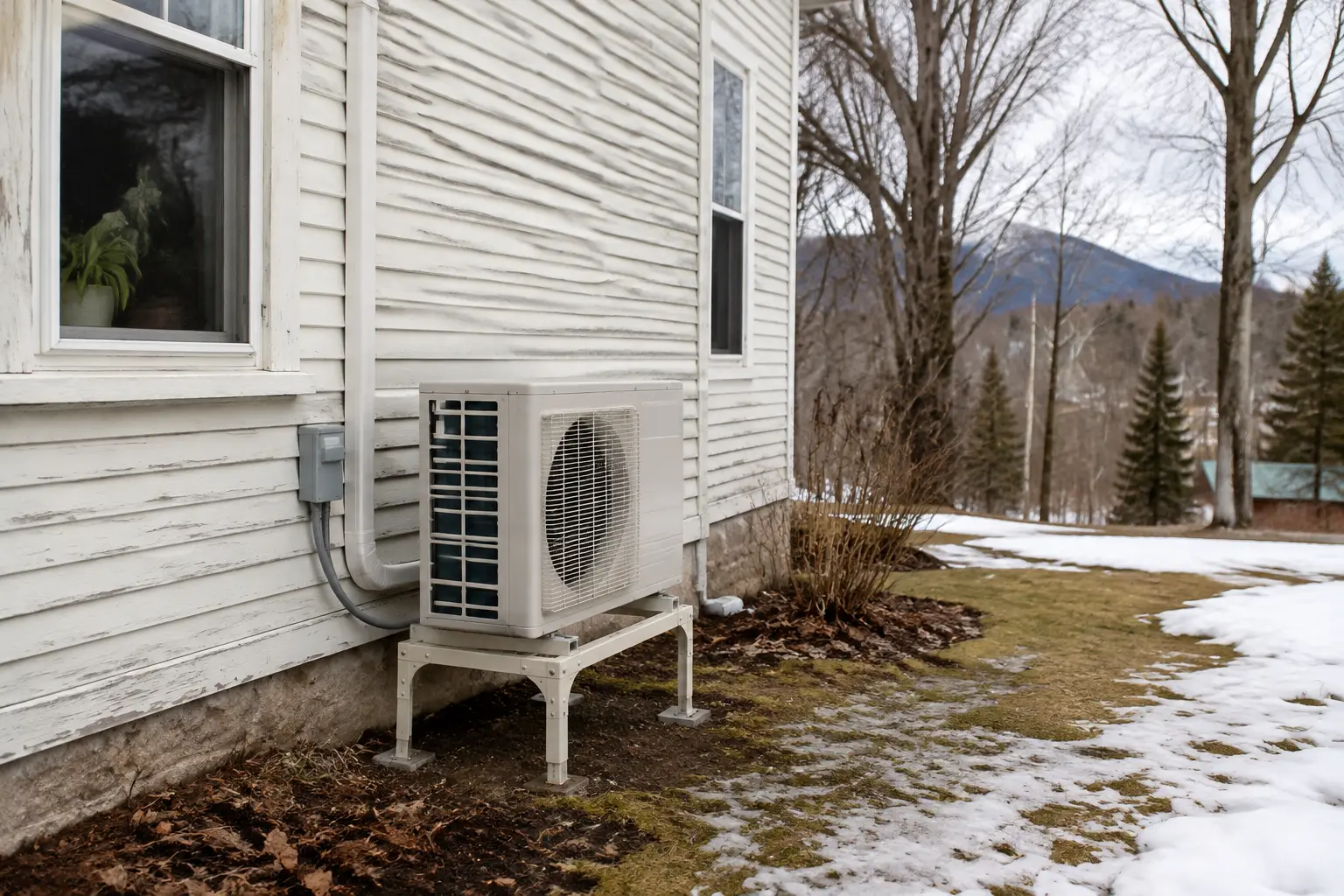
Short answer
The number that decides success here is capacity at the local design temperature, not the nameplate. Output falls as it gets colder, which is exactly when the building needs most. A proposal should state output at the temperature this area actually reaches and name what covers the remainder. A system that meets the load at seven degrees and is never asked what it does at minus twenty has not been designed for Vermont.
It has been specified for a catalogue. The supplementary question is equally practical: if the heat pump does not carry the coldest days alone, what does, how does it switch over, and what does that do to running cost. Ask for the design temperature used, the output at it, and the backup strategy in writing.
Heat-pump service by town
Jobs this covers
- Whole-home heat pump systems
- Supplemental heat pumps
- Ductless mini-splits
- Centrally ducted heat pumps
- Dual-fuel systems
- Replacement and electrification planning
Common problems and warning signs
- Fuel equipment is due for replacement
- The home lacks air conditioning
- Certain rooms need independent comfort
- Oil or propane use is a concern
- A renovation opens new distribution options
- Current Vermont incentives may support the project
What service may include
Outdoor units must sit above the snow. Real scope only shows up on the visit. A complete proposal should address load and capacity, indoor-unit locations, outdoor-unit stand and snow protection, line-set routes, condensate, controls, electrical work, backup heat, commissioning and permits.
What affects the recommendation and price
Cold-climate models cost more up front. Heat loss, floor plan, design temperature, equipment performance data, distribution, electrical capacity, weatherization, existing fuel system and incentive eligibility determine fit and cost.
What is different around Burlington
Much of the older housing has no ductwork, which points toward ductless equipment and makes room coverage the design question. Electrical service on older properties is often the binding constraint, with a panel or service upgrade as a significant line of its own.
What a written quote should tell you
- Rated capacity at the local design temperature, stated separately from the nameplate figure
- The room-by-room heat-loss calculation, and specifically which rooms the design does not cover
- What heats the building on the coldest days, and at what outdoor temperature the handover happens
- Electrical service and panel work, priced as its own line, not assumed
- Outdoor unit height above snow, clearance from roof shed, and drainage beneath it
| The design question | What the proposal should say |
|---|---|
| Capacity in this climate | Output at the design temperature this area actually reaches, stated separately from the nameplate figure |
| The coldest days | What covers the remainder, at what outdoor temperature the handover happens, and what that does to running cost |
| Room coverage | Which rooms the design does not cover; older housing with no ductwork points toward ductless, where coverage is the design question |
| Electrical service | A panel or service upgrade priced as its own line, not assumed |
| Outdoor unit siting | Height above snow, clearance from roof shed, and drainage beneath it |
Verify current details
Confirm anything time-sensitive on the issuing agency or utility page before you rely on “Cold-climate heat pump installation” for a project.
Common questions
Do heat pumps work during Vermont winters?
Properly selected cold-climate systems can operate at low outdoor temperatures. Building load, equipment capacity and backup strategy determine whole-home performance.
Should I remove my boiler or furnace?
Not automatically. Some projects retain existing heat for backup or hard-to-reach areas. Others are designed for full replacement.
How many indoor units do I need?
Room layout, door positions, load and comfort goals matter more than a simple unit-per-room rule.
Are heat pump rebates available in 2026?
Yes. Amounts and eligibility vary by utility, customer, equipment and project. Burlington Electric customers use different offers from many other Vermont customers.
What does cold climate heat pump actually mean?
It refers to equipment engineered to maintain useful capacity and efficiency at low outdoor temperatures, typically using variable-speed inverter compressors and, in many designs, vapour injection. The term has a specific meaning in the incentive world rather than only a marketing one: Vermont efficiency programmes and the Northeast Energy Efficiency Partnerships cold climate product list define criteria for what qualifies, and rebate eligibility usually depends on the specific model appearing on such a list. Ask for the model number and check it against the list your utility uses, instead of accepting the phrase itself as an assurance.
How do I know if a heat pump will keep my house warm in a Vermont winter?
Look at the capacity at the design temperature, not the nominal tonnage. Every cold-climate heat pump publishes a capacity table showing output at 47°F, 17°F, 5°F and often below, and output falls as it gets colder. The honest question is whether the capacity at your design temperature meets the calculated heat loss at that temperature. A contractor should show you those two numbers side by side. If they cannot, the design has not been done. Also ask what the backup is, when it engages, and what it costs to run, because the answer to that determines your worst monthly bill.
Can I install a heat pump myself?
Not legally in most cases, and the barrier is refrigerant. Handling refrigerant requires EPA Section 608 certification under federal law, and a heat pump also needs electrical work, a permit, and correct commissioning to deliver its rated performance. DIY pre-charged line-set kits exist for some ductless units and sidestep part of that, but they generally forfeit Vermont utility rebates, which for a heat pump can be worth more than the labour saved, and they leave you without a manufacturer's warranty in many cases. Check the rebate eligibility rules before deciding this on cost grounds.
What happens if a heat pump is sized without a heat loss calculation?
In a cold climate, sizing errors go both ways and both are bad. Undersized, and the system falls back on backup heat, often electric resistance, on exactly the cold days when it is most expensive to do so, which is how people end up with a shocking January electricity bill and conclude heat pumps do not work here. Oversized, and it short cycles in the shoulder seasons, dehumidifies poorly in summer and costs more than it needed to. Vermont's design temperature makes the calculation matter more here than almost anywhere.
How long does a heat pump installation take?
A ducted whole-home system is commonly two to four days. A multi-zone ductless installation is often one to three. Electrical service work, if the panel needs upgrading, can add calendar time because it involves the utility. The scheduling advice specific to Vermont is to do this work in spring or early autumn. An installer working in the shoulder season has time to commission properly, and commissioning is where the difference between a good and a mediocre heat pump installation actually lives.
Which utility rebate applies to me?
Your electric meter decides it, and this is a genuine and consequential difference in Greater Burlington. Burlington Electric Department customers, Green Mountain Power customers and customers of other Vermont utilities have different heat pump incentives with different amounts and different eligibility conditions, some income-qualified, some available to all customers, and Efficiency Vermont administers additional programmes. The same equipment in two houses a mile apart can earn substantially different money. Confirm current terms with the issuing utility directly before the installation date, since eligibility is normally judged on that date.
What does a heat pump's compressor warranty actually require?
Compressor warranties commonly run 10 to 12 years, but coverage is frequently conditioned on professional installation, registration and documented annual maintenance: miss any one of those and a compressor failure years later can be denied even though the calendar term has not expired.