The short version
There is no reliable Vermont heat-pump price without a building and design. System configuration, low-temperature capacity, number of zones, electrical work, line routes, condensate, mounting, controls and commissioning determine the installed scope. Rebates reduce eligible cost only after the address, equipment and installer requirements are verified. Incentive amounts are real but conditional: they reduce eligible cost only once the address, exact model and installer requirements are verified against the program's own current terms, not assumed from a contractor's estimate.
What belongs in the installed or completed scope
- Room-by-room heat-loss work and system design
- Single-zone, multi-zone or central ducted equipment
- Indoor heads, air handler, outdoor unit and controls
- Electrical circuits, disconnects and possible service changes
- Line sets, covers, condensate management and wall penetrations
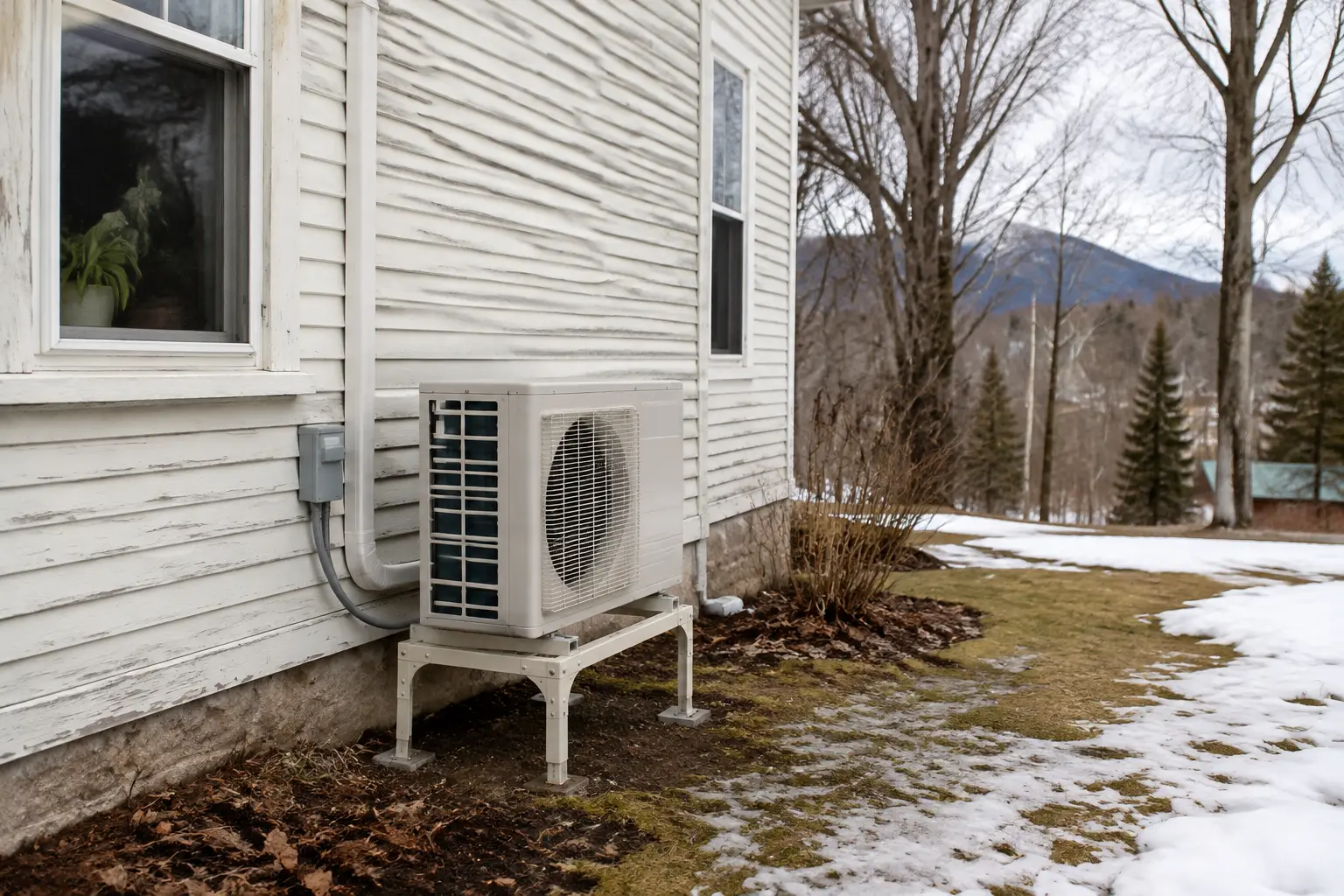
- Outdoor stand, snow clearance and roof-runoff protection
- Permits, startup measurements, warranty registration and owner instruction
Property and system conditions that change cost
- A one-room ductless project is not comparable to whole-home coverage
- Multi-zone outdoor units can have different low-temperature behavior from single-zone equipment
- Existing ducts may need airflow testing, sealing or modification
- Older electrical panels may require added scope
- Long or concealed line routes increase labor and finish coordination
- Retaining a boiler or furnace changes controls and backup planning
Put every estimate into the same columns
| Field | Complete proposal | Warning sign |
|---|---|---|
| Design | Heat loss, rooms, design temperature and backup role | A tonnage guess or only matching an old system |
| Equipment | Exact indoor and outdoor model numbers | A brand family with no performance data |
| Electrical | Circuit, disconnect, panel and electrician responsibility | Electrical work listed as owner-provided without detail |
| Installation | Line route, condensate, stand and weather protection | Placement decisions left for installation day |
| Completion | Vacuum, testing, commissioning and owner setup | Equipment described as complete when it merely turns on |
| Incentives | Program, eligible model, installer and paperwork | A rebate treated as guaranteed cash |
Incentives that change the net cost of heat-pump installation
Efficiency Vermont lists $1,200–$2,200 instant discount for ducted heat pumps. Burlington Electric Department lists $1,350–$5,450 (high performance) for centrally ducted heat pump (Burlington addresses only). The federal credit is not available for property placed in service after December 31, 2025. The full list, with limits and income adders, is in the Vermont heat-pump rebates guide.
Published Vermont installed-cost ranges for heat pumps
Planning figures help when they are labeled for what they are. The ranges below come from one Vermont installer's published guide to heat-pump costs. They are installed prices before rebates, they move with the equipment, the number of indoor units and the electrical work, and a written proposal for your building is what actually sets the number.
Read the ranges against the scope list above. A price at the low end usually describes a single or two-zone system with a short line run and no panel work, and a price at the high end usually includes several zones, a longer run, or electrical or ducting changes.
| System type | Published installed range | What usually pushes it up |
|---|---|---|
| Multi-zone ductless (2 to 3 indoor heads) | $8,000 to $14,000 | More heads, long line sets, wall finish work |
| Whole-home heat pump system | $12,000 to $22,000 | Ducting changes, panel or service upgrade, multiple outdoor units |
| Overall Vermont range cited | $4,000 to $15,000 or more | A single head at the bottom, whole-home coverage at the top |
Information that produces a more useful quote
- Complete address and utility
- Building age, size and weatherization
- Rooms and floors to be served
- Existing heat and desired backup plan
- Electrical panel size and available space
- Photos of potential indoor and outdoor locations
Common pricing traps
- Comparing proposals with different room coverage
- Using nominal capacity instead of cold-weather output
- Leaving electrical work and permits outside the total
- Ignoring snow, ice and maintenance access
- Subtracting an incentive before eligibility is confirmed
Verify current details
Confirm anything time-sensitive on the issuing agency or utility page before you rely on “How much does heat-pump installation cost in Vermont?” for a project.
Common questions
Why does a whole-home heat pump quote run so far above a few ductless heads?
A whole-home system covers every room, and usually adds ducting changes, larger electrical loads and more than one outdoor unit. A ductless proposal covers only the rooms that get a head. The two are not comparable unless both list the rooms served and the rooms left out.
Does a heat pump usually need an electrical panel upgrade?
Sometimes. An older panel with no spare breaker space may need added circuit space or a service change, and that work should be its own line in the quote so it is not discovered after the equipment is ordered.
Is the rebate subtracted from the quote automatically?
No. Incentives depend on the equipment model and the utility, and some carry income tests. Confirm eligibility with the utility before treating any rebate as a reduction of the price you compare.
What should a quote say about cold-weather performance?
It should give the output at the design temperature this area actually reaches, not the nameplate rating, and say what heats the building when the heat pump falls short. Multi-zone outdoor units can behave differently from single-zone ones at low temperature.
Which published incentives apply to a ducted or air-to-water heat-pump installation?
Efficiency Vermont lists a $1,200–$2,200 instant discount for ducted heat pumps. Income-eligible Vermonters get a bonus. Burlington Electric Department's centrally ducted rebate runs from $1,350 to $5,450 for high-performance systems. It adds a $500 income-qualified bonus and is limited to one per household or business. Its air-to-water rebate is up to $12,000, at $2,000 per ton, with a $400 income-qualified adder. Figures are as published on August 19, 2026.