The short version
Yes: cold-climate heat pumps can heat Vermont homes at low outdoor temperatures. Whether one system can cover the entire home depends on building heat loss, equipment capacity, distribution and design assumptions. A model's nominal size does not tell the whole story: what matters is delivered heating capacity and efficiency at low outdoor temperatures compared against the home's actual heat loss, not the number on a brochure's rating conditions.
The building is part of the system
Insulation, air leakage, windows, floor plan and room-to-room airflow determine how much heat is needed and where indoor units or ducts belong.
What decides whether a heat pump covers a Vermont home
| Factor | What it decides |
|---|---|
| Delivered capacity at low outdoor temperature | Whether the equipment meets the home's actual heat loss; the brochure's rating-condition number does not answer this |
| The building: insulation, air leakage, windows, floor plan, room-to-room airflow | How much heat is needed and where indoor units or ducts belong |
| Backup heat | A design choice, not an admission of failure: some homes run the heat pump as primary with minimal backup, others keep a boiler or furnace for the coldest weather, resilience or a hard-to-reach zone |
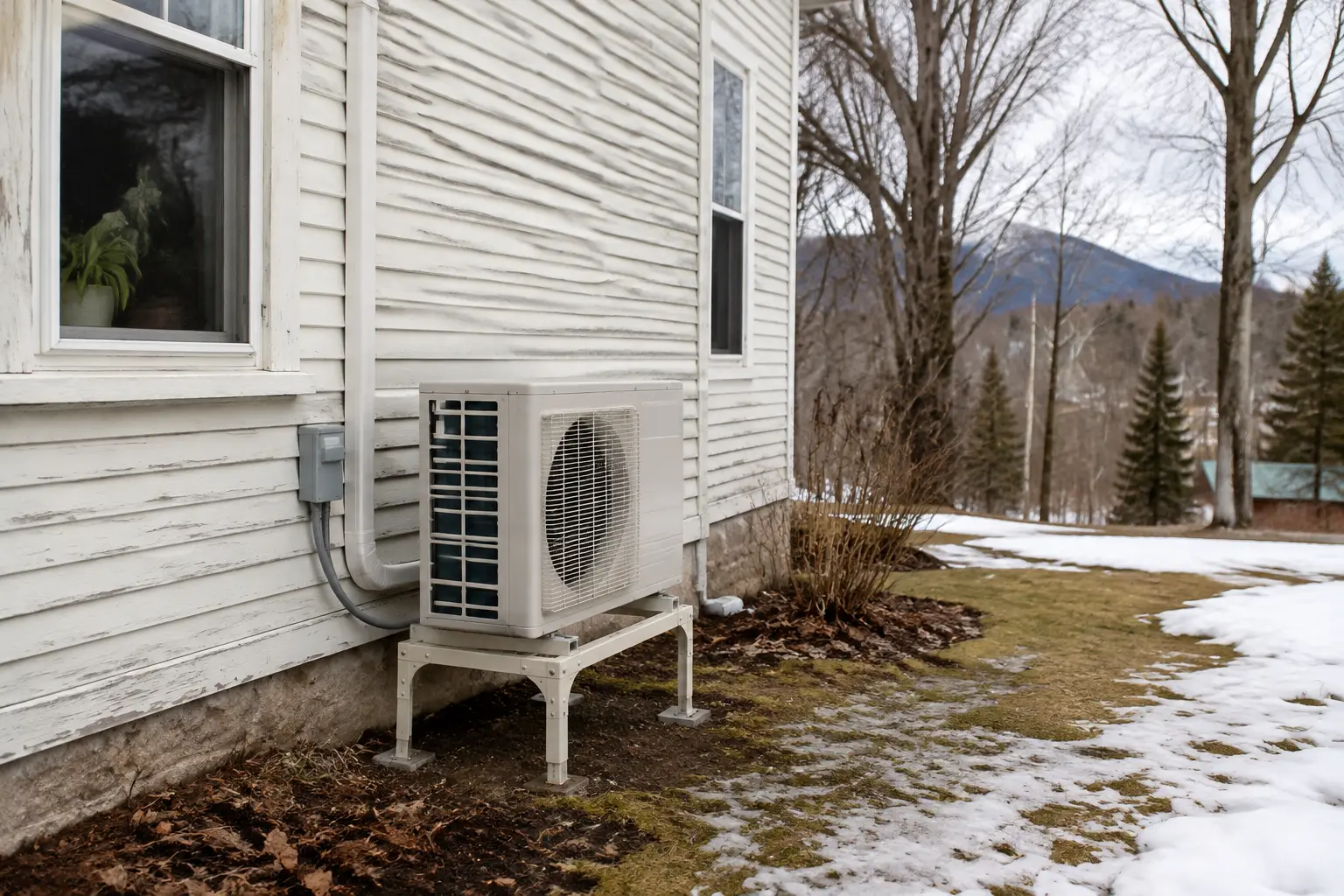
| Outdoor placement | Winter performance: the unit needs a stand, service access and protection from snow depth and roof runoff |
Backup heat is a design choice
Some homes use heat pumps as the primary system with limited backup. Others keep a boiler or furnace for very cold weather, resilience or hard-to-reach zones.
Outdoor placement affects winter performance
The unit needs a suitable stand, airflow, service access and protection from snow depth, roof runoff and falling ice. Defrost water must drain without creating damaging ice.
What to document before service
A clear record helps a professional understand the pattern before changing the system.
- Recent fuel and electricity use
- Room layout and doors normally kept closed
- Insulation, air-sealing and window condition
- Existing distribution and uncomfortable rooms
- Electrical service and panel capacity
- Desired backup heat and outage strategy
What a complete evaluation should establish
A defensible design compares room-by-room or whole-building heat loss at the local design temperature with the selected equipment’s published low-temperature capacity. It also explains distribution, minimum output during mild weather, defrost, backup operation, electrical demand, condensate and snow management, not relying only on nominal tonnage.
After the work
Commissioning should document refrigerant and electrical checks, airflow or head operation, control settings and homeowner instruction. During the first cold weather, record indoor comfort, outdoor temperature and backup use so control or distribution problems can be corrected while installation details are still fresh.
Verify current details
Confirm anything time-sensitive on the issuing agency or utility page before you rely on “Do heat pumps work in Vermont winters?” for a project.
Common questions
At what temperature does a heat pump stop working?
It depends on the model. Cold-climate systems publish low-temperature operating and capacity data, but output usually declines as it gets colder.
Will a heat pump lower my heating bill?
It depends on current fuel, utility rates, building, equipment and use. Savings are not automatic, especially compared with some natural-gas systems.