The short version
A light layer of frost on a heat pump outdoor unit that clears during a brief automatic defrost can be normal in cold, damp weather. A solid ice shell, ice that returns immediately, blocked airflow, roof runoff, a fan that does not turn or falling indoor temperature points to a condition that needs attention.
Normal frost is thin and temporary
Some frost is normal. During heating, the outdoor coil is cold and can collect frost from damp air. The system periodically enters defrost, temporarily shifting operation to warm the outdoor coil. Steam, water below the unit and a short change in indoor airflow can occur during that cycle. During a defrost cycle the outdoor fan stops, the unit briefly runs in reverse to warm the coil, and steam may rise from the cabinet for a few minutes, which alarms people but is exactly what the system is designed to do.
Ice that does not clear is different
An outdoor unit encased in ice cannot exchange heat normally. A defrost-control fault, sensor problem, outdoor-fan failure, refrigerant-system fault, restricted coil or drainage problem can all produce similar symptoms and require measured diagnosis.
- Ice remains after more than one expected operating cycle
- The outdoor fan is stopped while the compressor continues abnormally
- Ice extends into the fan or cabinet
- Room temperature keeps falling
- A breaker trips or a persistent fault code appears
Normal frost, or ice that needs attention
| What you see | Normal or needs attention |
|---|---|
| A light layer of frost that clears during a brief automatic defrost | Normal in cold, damp weather |
| Steam, meltwater below the unit and a short pause in heating | Part of the normal defrost cycle |
| A solid ice shell, ice that returns immediately, or ice that does not clear after more than one cycle | Needs attention: points to a defrost-control fault or a drainage issue |
| An outdoor fan that has stopped while the compressor keeps running | Needs diagnosis |
| Drifting snow against the coil even with a raised stand | A clearance problem: a raised stand helps but does not stop drifting |
| Chipping at the ice with a tool | Never: it can puncture the coil and release refrigerant |
Snow, runoff and clearance matter
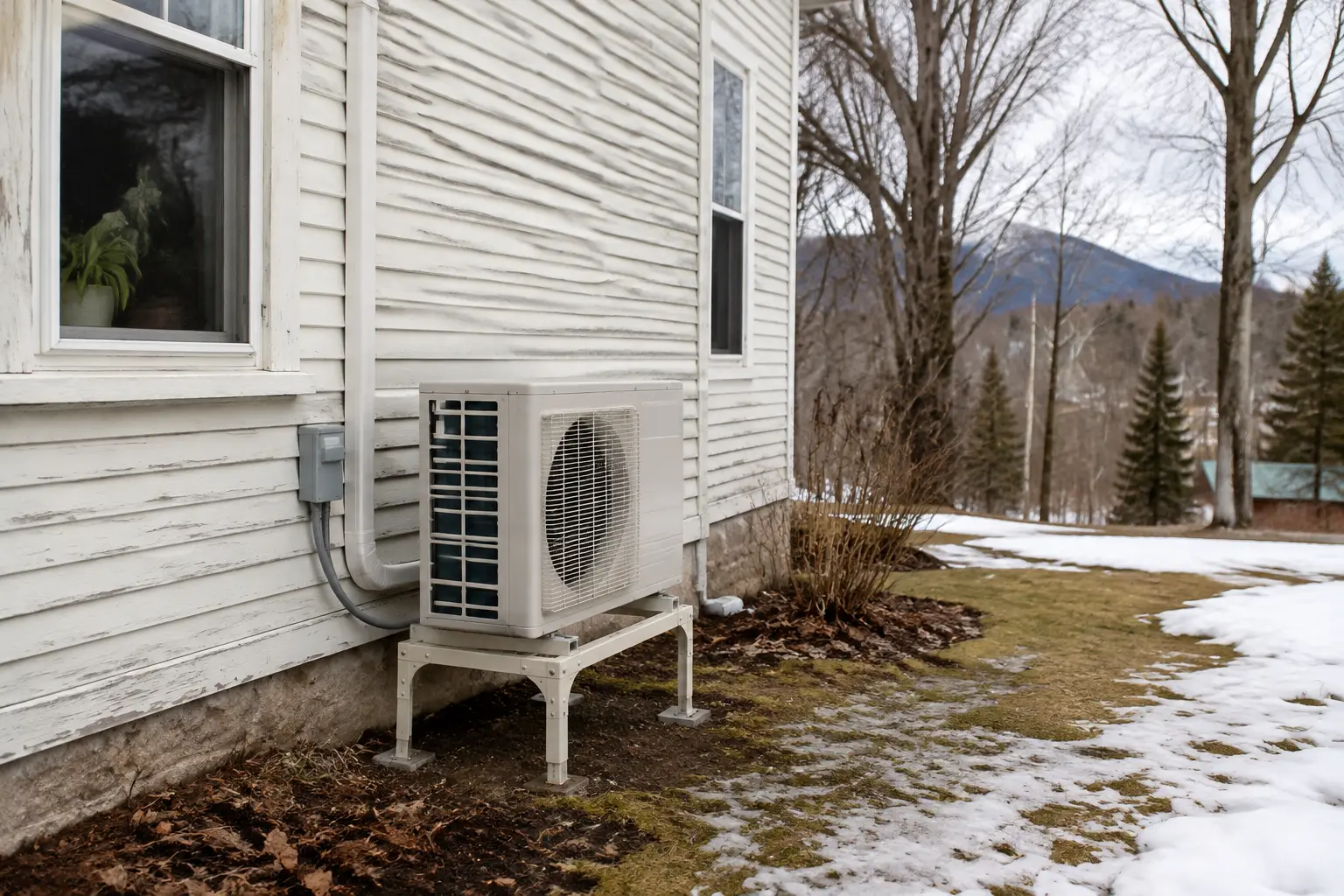
A raised stand helps maintain air and drainage clearance through Vermont snow. Drifting snow, plow piles, leaves and roof runoff can still block the coil or freeze beneath the unit. Clear loose material without bending fins, striking piping or entering an unsafe icy area.
Do not chip, torch or enclose the unit
Flame and high heat can damage wiring, plastic and coatings. Do not wrap an operating unit or build a cover that restricts the manufacturer’s required airflow and service clearance.
Checks you can make from a safe distance
Confirm heating mode and record the setpoint, room temperature, outdoor temperature, error code and ice pattern. Look for snow blockage and roof runoff. If the manual provides an ordinary filter check, follow it. Do not open electrical or refrigerant compartments.
When to request heat-pump repair
Request service when defrost does not clear the coil, heating capacity drops, ice returns rapidly, water enters the building, the fan contacts ice, a breaker trips or controls display a fault. Turn the system off for grinding, sparking, burning odor or visible electrical damage.
Verify current details
Confirm anything time-sensitive on the issuing agency or utility page before you rely on “Why is my heat-pump outdoor unit covered in ice?” for a project.
Common questions
Can I pour hot water on an iced heat pump?
Do not use boiling water. Sudden temperature change can damage components and water can refreeze. Follow the manufacturer’s instructions and request service for persistent ice.
Should I cover my heat pump before snow?
Do not cover an operating unit. Maintain required clearance and address drifting or roof runoff with a design that does not restrict airflow.
Why is there water under the outdoor unit?
Meltwater from defrost is expected and should drain away. A large frozen base, blocked drainage or water flowing toward the building needs correction.