The short version
Heat-pump supply air often feels less hot than furnace air, and a brief cool period during defrost can be normal. Air that stays cool while the room temperature falls can signal a mode setting, blocked airflow, outdoor-unit problem, refrigerant fault or undersized system. The first real question is whether the room is actually losing heat.
First decide whether the room is actually losing heat
Warm is not hot. A variable-speed heat pump may run for long periods with gentle, warm airflow. Compare the room temperature with the setpoint over time instead of judging only by hand temperature at the grille or indoor head.
A short defrost cycle can be normal
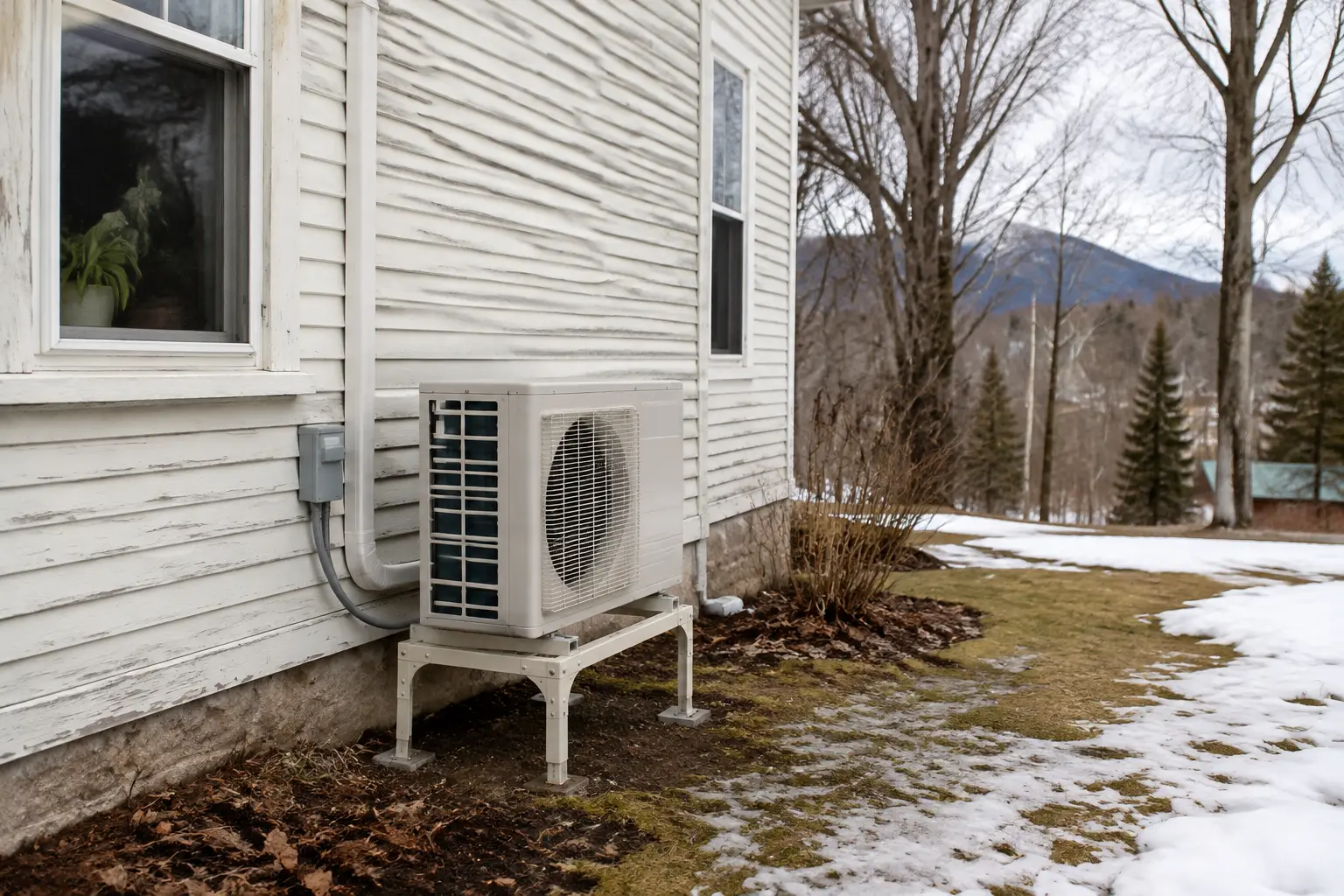
In damp, cold weather the outdoor coil may frost. The system periodically reverses to melt that frost, and indoor airflow may pause or feel cooler. Persistent ice, repeated defrosting or a unit buried in snow is not normal operation.
- Keep snow and leaves clear without striking the coil
- Do not chip ice from the outdoor unit
- Watch whether normal heat returns after defrost
- Note any error code or flashing light
Cool air in heat mode: normal or a fault
| What you notice | What it can mean |
|---|---|
| Air at the grille feels less hot than furnace air, but the room holds its setpoint | Normal: a variable-speed heat pump often runs for long periods with gentle airflow |
| A brief cool period or pause in indoor airflow | Normal defrost: in damp cold weather the outdoor coil frosts and the system periodically reverses to melt it |
| Air stays cool while the room temperature falls | A mode setting, blocked airflow, an outdoor-unit problem, a refrigerant fault or an undersized system |
| One room is uncomfortable while the equipment runs correctly | A closed door or a clogged filter |
| Cool air on the coldest days | Delivered capacity falls as outdoor temperature drops, which is why a cold-climate model's low-temperature data matters more than its nominal size |
Check controls and airflow
Confirm heating mode, a reasonable setpoint and a clean filter where the system has one. Open supply and return paths. A closed door, blocked return, clogged filter or incorrect fan-only setting can create a room problem even when the equipment runs.
Outdoor temperature and system design matter
A cold-climate model selected from low-temperature performance data can serve very different loads than a standard model with the same nominal tonnage. Building heat loss and distribution determine whether backup heat is required.
Signs the system needs service
Request repair when room temperature keeps falling, the outdoor fan or compressor never starts, breakers trip, ice does not clear, water enters the building, the unit makes grinding or electrical sounds, or controls show a persistent fault.
What to report
Share indoor and outdoor temperature, setpoint, model, affected zones, operating mode, error code, ice pattern, recent power interruption and whether backup heat is available. Photos of the outdoor unit and controller can help before arrival.
Verify current details
Confirm anything time-sensitive on the issuing agency or utility page before you rely on “Why is my heat pump blowing cool air in heat mode?” for a project.
Common questions
Should heat-pump air feel hot?
It can feel warm, not furnace-hot, especially at low speed. The better test is whether the system maintains the setpoint.
How long does heat-pump defrost take?
It is normally brief. Exact timing varies by equipment and weather. Frequent or incomplete defrosting needs evaluation.