Short answer
Compare both bills together. The electric bill should rise, because heating that used to be billed as fuel is now billed as electricity. The comparison that matters is total heating cost across both bills, not the electric bill alone. A rise much larger than expected usually means the system is running on electric resistance backup more than it should.
That is a controls question far more often than an equipment fault: a switchover temperature set conservatively, or a thermostat calling for more heat than the heat pump can supply, hands the work to the most expensive element in the system. Before assuming the heat pump is underperforming, compare fuel plus electricity against the same months last year and check what the switchover is set to.
First, make the right comparison
The single most common mistake here is comparing this January's electric bill to last January's electric bill. That comparison is meaningless if the heating source changed, because last year's heating was on a different bill entirely.
Add both together. Take this winter's electricity plus any remaining fuel deliveries, and compare that to last winter's electricity plus fuel. Only then are you looking at the thing you actually care about. Adjust for weather too: a colder winter costs more regardless of the equipment, and heating degree days for the season are published, so a bad comparison can be corrected instead of argued about.
Then work out whether backup heat is running
This is the fault that produces a genuinely shocking bill, not a higher one. Electric resistance backup, strip heat in a ducted system, or a separate baseboard or electric element, produces roughly one unit of heat per unit of electricity. A heat pump in reasonable conditions produces two to three or more. A system leaning on resistance heat is therefore costing multiples of what it should for the same warmth, and it does so silently, because the house stays comfortable.
| Cause | How to spot it | Fix |
|---|---|---|
| Deep thermostat setbacks | Recovery from a big setback calls backup heat | Hold a steadier setting |
| Emergency heat left on | A switch or mode set months ago and forgotten | Check the thermostat mode |
| Backup lockout set too high | Backup engages in mild weather, not just extreme | Technician adjusts the balance point |
| Undersized heat pump | Backup runs routinely, not occasionally | Design problem, get the load calculated |
| Low refrigerant | Capacity lost, backup makes up the difference | Technician, find the leak |
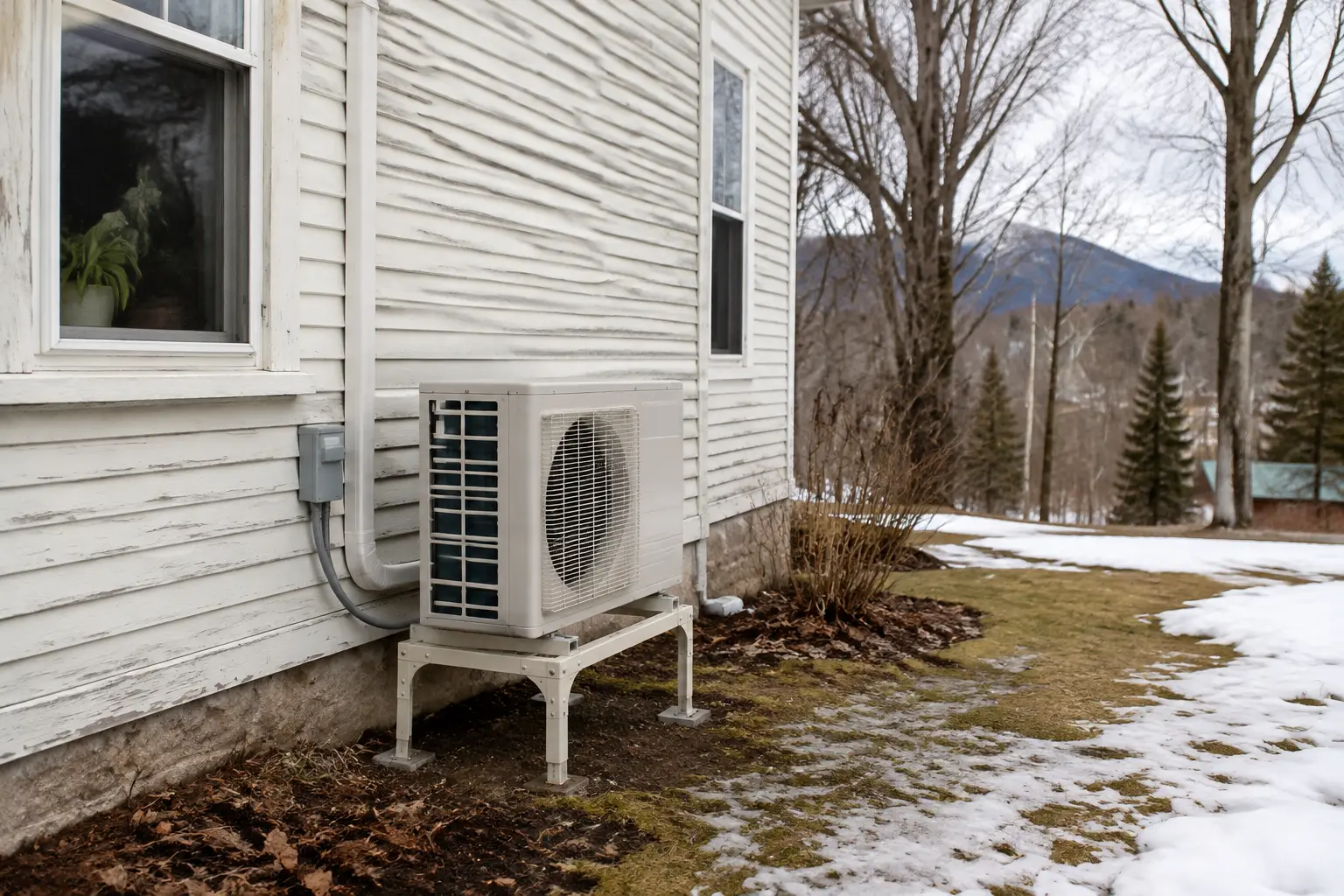
| Blocked outdoor unit | Snow or ice starving the coil | Clear it, and raise it if it sits at grade |
What you can check yourself
- Look for an emergency or auxiliary heat indicator. Most thermostats show when backup heat is engaged, often as EM HEAT or AUX. If it is showing in mild weather, that is your answer. If someone switched it to emergency heat during a cold snap and never switched it back, that alone can explain the whole bill.
- Stop using deep setbacks. Set the thermostat to a steady temperature rather than dropping it overnight. Recovering from a deep setback is precisely when a heat pump calls for backup, which means the setback can cost more than it saves. This is the opposite of the advice that applies to a furnace.
- Clear the outdoor unit. Snow, ice, drifting and anything stacked against the coil reduce capacity, and lost capacity is made up by backup heat. Check underneath it too: a unit standing in refrozen meltwater cannot defrost properly.
- Wash the filters. Restricted airflow reduces output for the same reason and has the same consequence.
- Check your rate. Some Vermont utilities offer rates or programmes relevant to electrified heating, and being on the wrong rate is a billing problem, not an equipment one. Ask your utility directly what applies to a heat pump customer.
- Read the meter weekly for a month. Weekly readings alongside outdoor temperature tell you far more than a monthly bill does, because they show which conditions are expensive. A written record is the most persuasive thing you can hand a technician.
The Vermont numbers that decide whether this was a good idea
Whether a heat pump saves money here depends on your own electric rate, your own fuel price and the system's actual seasonal performance, and those vary enough across Greater Burlington that the answer genuinely differs between neighbouring towns. Burlington Electric, Green Mountain Power and other utilities have different rates and different heat pump programmes, which is also why the same equipment earns different incentives depending purely on the meter.
Efficiency Vermont publishes comparison tools for fuel cost per unit of delivered heat, and that is the right basis instead of price per gallon against price per kilowatt-hour, which compares two things that are not comparable. If your total heating cost went up instead of down, that is worth establishing with numbers before deciding whether the problem is the equipment, the installation or the expectation.
Common questions
What is auxiliary or emergency heat?
Auxiliary heat is a secondary heat source, usually electric resistance elements, that supplements the heat pump when it cannot meet demand alone, and it engages automatically. Emergency heat is a mode you select manually that shuts the heat pump off and runs on that backup exclusively, intended for when the heat pump has failed. The important practical difference is that emergency heat left switched on runs the most expensive heat source in the house continuously, and thermostats do not always make that obvious.
Should I use a setback thermostat with a heat pump?
Generally not a deep one. Recovering from a large setback requires more output than the heat pump alone can deliver, so the control calls in resistance backup, and the expensive recovery can easily exceed the savings from the cool hours. A steady setting, or at most a shallow setback of a couple of degrees, is the usual recommendation for heat pumps and for high-mass radiant systems alike. Forced-air furnaces are the case where deep setbacks genuinely pay.
What happens if I just leave it and pay the bills?
If the cause is expected, heating cost moving from fuel to electricity, nothing, and the total may well still be lower. If the cause is a system running on resistance backup because of a fault, an undersized design, or a setting nobody has revisited, you are paying several times the necessary rate every cold month and the underlying problem goes unexamined. The two situations produce similar bills and require completely different responses, which is why establishing which one you have is worth the effort.
How do I know whether my heat pump is undersized?
The signature is backup heat running routinely rather than only in extreme conditions. Ask for the heat loss calculation done at design stage and the equipment's rated capacity at the local design temperature: those two numbers side by side answer the question directly. If no calculation was done, that itself is informative, and it is the most common defect in residential heat pump installation. A technician can also log runtime and backup engagement over a cold spell.
How long should it take to see whether it was worth it?
A full heating season, compared honestly. One month is not enough because weather dominates short periods, and the first winter includes the learning curve on settings. Keep the fuel and electricity totals for a season alongside heating degree days for that season, and compare to the prior year on the same basis. The answer is useful on its own. A January-to-January electric bill comparison is not.
Who do I ask about rates and rebates: the installer or the utility?
The utility, and directly. Rate options, heat pump programmes and rebate eligibility are set by the utility that serves your meter, and they differ between Burlington Electric, Green Mountain Power and others in ways that installers do not always track accurately. Efficiency Vermont administers further programmes. Confirm current terms with the issuing organisation, not relying on a brochure or a third-party rebate aggregator; aggregators have been found to disagree with the primary sources.