See all of our heating and cooling services.
Short answer
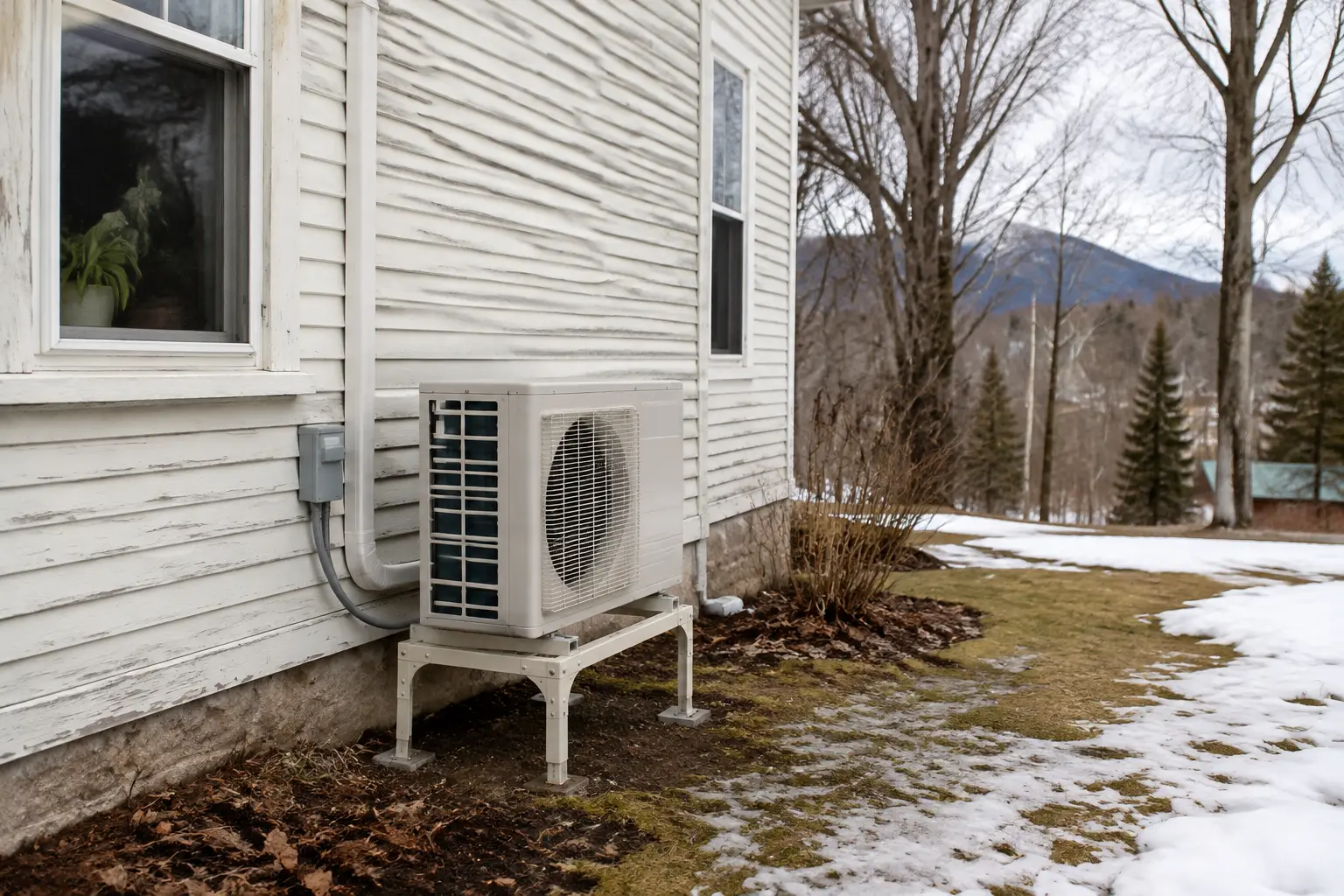
An air-to-water heat pump makes hot water for a hydronic system, not blowing warm air, so it can use existing radiators and baseboard, valuable in older housing with no ductwork. The catch is temperature: it produces water cooler than a boiler, and existing radiation may not deliver enough heat at that temperature. That single constraint decides whether the route works in a given building, and it is answerable before anything is bought. Larger radiators, additional runs or a low-temperature emitter in the coldest rooms may be part of the job rather than an upgrade. Ask what water temperature the proposal assumes, whether the existing radiation was assessed against it room by room, and what covers the coldest days.
Jobs this covers
- Boiler replacement studies
- Radiant floor integration
- Buffer tank and control design
- Hybrid boiler systems
- Hydronic cooling
- Domestic hot-water integration
Where an air-to-water heat pump fits
- A hydronic home is considering electrification
- Radiant heat can operate at low water temperature
- A boiler is near replacement
- Current incentives may support the project
- The owner wants heating and cooling from one plant
What service may include
Low water temperatures favor radiant floors. Real scope only shows up on the visit. A design should include heat loss, required supply-water temperature, emitters, storage or buffer strategy, controls, electrical capacity, outdoor-unit performance, backup and commissioning.
What affects the recommendation and price
Radiators sized for hot water may need upgrading. Design water temperature, building load, radiation, electrical service, equipment capacity, controls, storage, weatherization and incentives drive feasibility and cost.
What is different around Burlington
Air-to-water heat pumps suit the older local housing stock where hydronic radiators or baseboard exist and ductwork never will. Whether the existing radiation can heat the house at lower water temperatures is the calculation that decides it.
What a written quote should tell you
- Whether the existing radiation was assessed at the operating temperature the unit produces
- Which rooms, if any, would need additional or larger radiation
- Capacity at the local design temperature, and what covers the coldest days
- Whether an existing boiler is retained as backup and how the two are controlled
- Electrical service capacity, and whether domestic hot water is part of the scope
| The question | Why it decides the project |
|---|---|
| What water temperature the unit produces | It is cooler than boiler water, and radiation sized for boiler water may not deliver enough heat at that temperature |
| Whether the existing radiation was assessed room by room | Larger radiators, additional runs or a low-temperature emitter in the coldest rooms may be part of the job |
| What covers the coldest days | Capacity at the local design temperature, and whether an existing boiler stays as backup and how the two are controlled |
| Existing radiators and baseboard | This is the electrification route that can use them, which matters in older housing with no ductwork |
Verify current details
Confirm anything time-sensitive on the issuing agency or utility page before you rely on “Air-to-water heat pump systems” for a project.
Common questions
Can it replace a boiler completely?
Some designs can; others retain backup. Load, emitters and low-temperature capacity determine the answer.
Can the system provide cooling?
Yes with suitable fan coils or other condensation-managed distribution. Standard heating-only baseboard cannot provide cooling.
Are Vermont incentives available?
Efficiency Vermont and Burlington Electric publish offers, subject to utility, equipment and project rules.
What is an air-to-water heat pump?
It is a heat pump that takes heat from outdoor air and puts it into water rather than into air, so it can feed a hydronic system, radiant floors, radiators or baseboard, and often domestic hot water as well. That distinguishes it from the far more common air-to-air heat pump, which produces warm air through ducts or ductless heads. For Vermont's large stock of houses with existing hydronic heating and no ductwork, it is the technology that allows a switch away from oil or propane without abandoning the distribution system already in the walls and floors.
How do I know if my house is a candidate?
Three tests. Are the emitters low-temperature capable, or willing to be made so. Radiant floor, oversized radiators, or a plan to change them? Is there a place for an outdoor unit that stays clear of snow and does not aim noise at a bedroom or a neighbour? And is there electrical capacity plus a sensible plan for backup on the coldest nights? A Vermont house with radiant floors and a failing oil boiler is close to the ideal candidate. A house with minimal baseboard sized for 180°F water is a much harder project than the brochure suggests.
Is an air-to-water heat pump a DIY project?
No. It combines refrigerant work requiring EPA certification, hydronic system design, electrical work and controls integration, and it is among the more demanding residential mechanical installations there is. It is also a technology where the installer base is genuinely narrower than for ductless, not every HVAC contractor has done one, so the meaningful homeowner effort goes into finding a contractor with actual air-to-water experience and asking to speak to a customer whose system has been through a Vermont winter.
What happens if an air-to-water system is paired with high-temperature emitters?
It performs badly and costs a great deal to run, and this is the central design risk with the technology. Heat pumps are efficient because they lift heat over a small temperature difference. Asking one to make 180°F water for undersized baseboard collapses its efficiency and may exceed what the equipment can produce at all. The system belongs on radiant floors, on generously sized panel radiators, or on baseboard that has been oversized deliberately, and if the existing emitters cannot run at low temperature, changing them is part of the project instead of an optional extra.
How long does an air-to-water installation take?
Commonly three to seven days, longer than a ductless retrofit, because the hydronic side involves a buffer tank, circulators, controls and integration with whatever remains of the existing system. If emitters are being changed or added, that extends further. This is emphatically shoulder-season work: it should not be attempted as an emergency replacement in January, both because the commissioning needs time and because the house needs its old heat source until the new one is proven.
Do air-to-water heat pumps qualify for Vermont rebates?
Often yes, and frequently under different programme categories than ductless mini-splits, sometimes with larger incentives: Burlington Electric has historically offered meaningful support for air-to-water systems specifically. Because the category is less common, the eligibility rules and the qualifying equipment lists are worth confirming in detail with your own utility before the equipment is ordered, not after. Ask specifically whether the model is on the programme's qualifying list and whether the installer needs to be a participating contractor.
What is a typical air-to-water heat pump warranty?
Warranty terms vary more between manufacturers than for standard air-source equipment, since the installer base and the technology itself are less standardized: get the specific compressor, buffer tank and controls warranty terms in writing, not assuming they match a more familiar heat pump product.
What is the most common mistake pairing an air-to-water system?
Pairing it with existing high-temperature baseboard without changing or supplementing the emitters. The heat pump's efficiency collapses when asked to produce water hot enough for undersized baseboard, and that mismatch is a design decision, not an equipment defect.